Coming Home Is Part of the Trip: Life After the Airport Hug
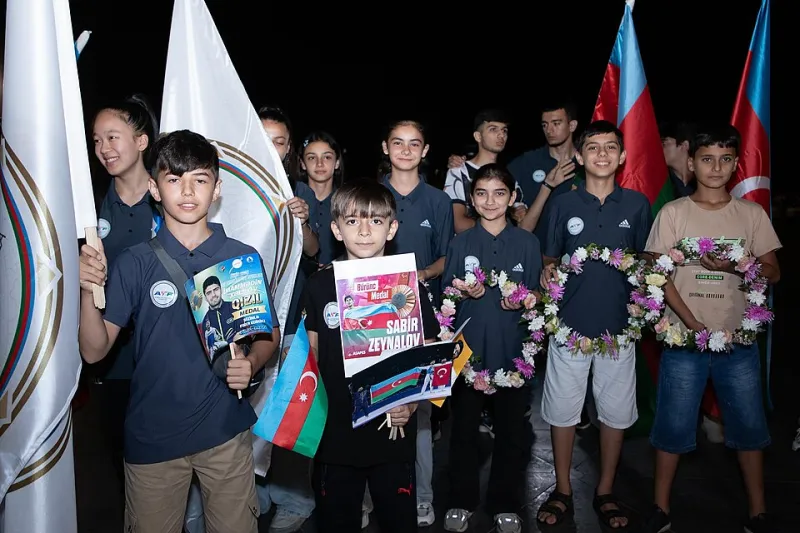
Photo: The National Paralympic Committee of Azerbaijan, CC BY-SA 4.0, via Wikimedia Commons
The hug at the airport is a strange bit of theatre. Someone you've shared three months of early mornings with holds you at arm's length, says something kind and slightly rehearsed, and then you're through the doors with a rucksack and a phone full of photographs. The placement is done. The trip isn't. That second bit — the return leg — is where most purposeful journeys get quietly abandoned, and it's worth talking about properly.
The fortnight nobody briefs you for
Ask anyone who has volunteered abroad and they'll describe some version of the same week. You land into a country where the heating is on and the taps are drinkable, and instead of relief you feel oddly annoyed by both. The supermarket is too bright and too full. Someone complains about a delayed train and you have to physically stop yourself from saying something unkind. You sleep for fourteen hours and wake up at 3am.
This is reverse culture shock, and it is not a sign of ingratitude or fragility. It's just what happens when your assumptions get rearranged faster than your daily routine does. It tends to arrive in three waves: the euphoric first week where you bore everyone rigid, the wobbly second and third weeks where nothing at home feels quite real, and then a slower settling where the experience stops being an event and starts being part of how you see things.
Two practical things help. First, don't book anything demanding for your first few days back — no big work project, no family reunion you're hosting. Second, keep a notebook for the first month. Not for the pretty observations. For the uncomfortable ones. They're the ones that tell you what actually changed.
'So how was Africa?' and other conversations at the kettle
Here is a thing alumni mention again and again: the gap between what you want to say and what people have time to hear. A colleague asks how it went while the kettle boils. A relative wants the highlights in ninety seconds. You have a hundred hours of material and no way in.
We asked a handful of returned volunteers how they handled it. Nearly all of them landed on the same trick: the short answer, given willingly, with an invitation attached. Something like — 'Genuinely brilliant, and much harder than I expected. I'll show you the photos if you're interested, but the honest version takes a pint.' That gives people an exit and gives you a door.
A few more things worth knowing:
- You are allowed to say the placement was complicated. Funders, hosts and former volunteers all tend to prefer an honest account to a glossy one.
- Try not to correct people mid-sentence, however tempting. 'Actually it was Ghana, not Africa' is true and also a conversation-ender.
- Be careful with the saviour language you hear coming out of your own mouth. It's contagious and it does the work no favours.
- If a colleague asks whether it's 'worth doing', tell them what it cost you — money, leave, discomfort — as well as what it gave. They're weighing it up for real.
Keeping in touch without becoming the main character
Staying in contact with the people you worked alongside is one of the good parts of going. It can also, if you're not careful, turn into a long, slow extraction of gratitude and updates from a community that has moved on with its life.
A rough rule from people who've done this well: let the hosts set the pace. If they message, reply warmly. If they don't, don't assume you've been forgotten — school terms, harvests, power cuts and ordinary busyness all happen. Don't send monthly requests for impact stories to use in your LinkedIn post.
Money is the trickier one. Sending cash directly to an individual can feel like the most human thing to do and can simultaneously undermine the local organisation that employs them, distort relationships between neighbours, and put pressure on someone to keep asking. If you want to keep giving, route it through the in-country partner you worked with, and ask them what they actually need rather than what you'd like to fund. Photos of your name on a plaque are not the goal.
One more: honour the unpaid work of hosting. A thank-you note to the family who fed you for eight weeks, sent to arrive a month after you left rather than the day you landed, will land better than almost anything else you do.
Where the placement turns into something local
Here's the bit the 'gap year' framing tends to miss. The skills you used overseas are usually needed about four miles from your front door.
Returned volunteers we've spoken to have channelled things in fairly unglamorous directions: ESOL conversation classes at a library in Leeds, a food bank rota in Bristol, treasurer duties for a small charity that had been begging for one for years, school twinning projects run through a local council, a Rotary club that needed someone who could write a funding bid. None of it photographs well. All of it lasts.
If you learned to teach with three resources and no photocopier, you can teach. If you learned to run a meeting where half the room speaks a different first language, that's a skill your local refugee support group would bite your hand off for.
A short return plan
Give yourself ninety days and keep it small.
- Week one: rest. Say no to things. Write down three moments that still bother you.
- Week two to four: find one local organisation doing adjacent work. Not five. One.
- Month two: get back in touch with your in-country partner with something useful — a resource, an introduction, a translation, an honest reference for a funding application.
- Month three: tell the story properly to at least one person who wasn't there. A talk, a written piece, a proper conversation over dinner.
The airport hug is not the ending. It's the point at which the work stops being supervised and starts being yours.