Who Carries the Keys When You Fly Home? How to Spot Overseas Placements Built for Life After Volunteers
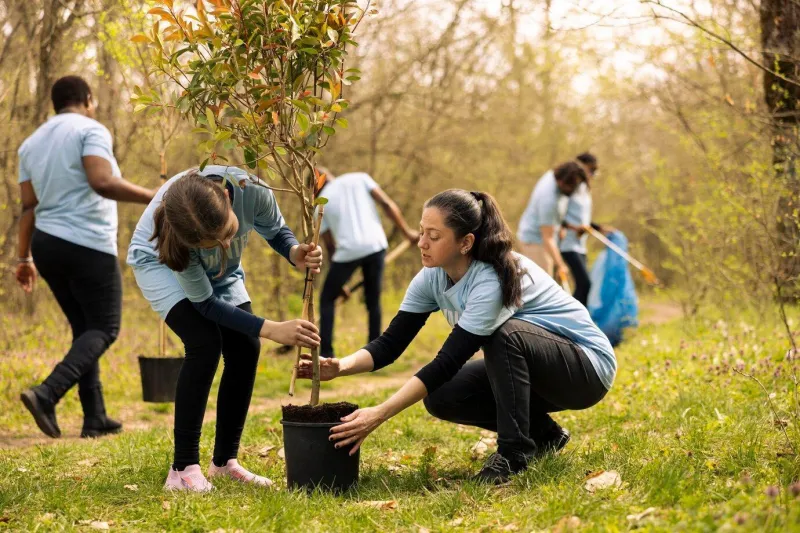
Photo: volunteer handover meeting with local staff in community garden, via lirp.cdn-website.com
Most placement brochures sell the fortnight you will spend abroad. The better ones sell the months after you have gone. That shift in emphasis is not a small detail. It is the difference between a project that uses volunteers as a temporary workforce and one that treats a visitor's departure as a built-in part of the plan.
I have come to think of this as the handover question. It is not a cynical test. It does not assume every overseas placement is a vanity project. It simply asks whether the organisation can describe, in plain terms, what happens when the volunteer-sized hole appears in the rota.
The placements I trust most tend to pass a simple check: local people are not waiting for outsiders to arrive before the real work can start. Outsiders may add energy, money, skills or an extra pair of hands. But the project's memory, decisions and future should sit with people who live there.
The departure lounge is where good placements are built
Ask a placement organiser what you will do on day three and most can answer. Ask what the local team will do in week three after you leave and the quality of the answer often drops. That is not always a red flag. Some very good projects are small, informal and not fluent in the language of handover plans. But the answer should exist somewhere, even if it is a one-page note and a named person.
A good handover has three parts. First, there is a named local lead who will still be there after the volunteer cohort changes. Second, there is a written or spoken plan for the work that continues: who does it, when, and with what money. Third, there is a way for the next person to inherit useful information, whether that is a community contact list, a lesson plan, a maintenance schedule or a simple list of what not to do.
None of that requires a glossy manual. It requires the organisation to think of volunteers as guests in a longer story, not as the plot itself.
Six questions to ask before you book
You can ask these on a video call, in an email, or at an information session. The point is not to interrogate anyone. The point is to hear how comfortably they talk about life after you leave.
1. Who owns the project? Not who founded it, and not who funds it. Who makes the decisions about what happens next? If the answer is a UK office, a foreign volunteer coordinator and a rotating cast of visitors, ask where local residents and partner organisations sit in that chain. A genuine cultural exchange should have local voices with real authority, not just a cameo in the welcome meeting.
2. What does the local team do when no volunteers are there? This is the heart of the handover question. A credible answer might be: the community nurse runs the clinic, the local teachers deliver the curriculum, the co-operative manages the farm, and volunteers support specific tasks at specific times. A vague answer about 'keeping the momentum going' is less useful.
3. Which budget lines survive my flight home? Volunteer fees often cover food, accommodation and coordination while you are on site. That is fair. But ask what portion is committed to local salaries, training, equipment or follow-up after the placement ends. If every pound is consumed by the volunteer experience, the project is not really being funded. It is being hosted.
4. Who is being trained, and for what? Training is a good sign, but only if it is not a performance for donors. Ask who receives training, whether they are paid or local, and whether the skills stay in the community. A short placement can usefully support training that already exists. It is much harder for a two-week visitor to create a training programme from scratch and hand it over cleanly.
5. What does success look like six months after I leave? A good organiser will have a concrete answer: a certain number of classes continued, a nursery still watered, a survey database updated, a local committee meeting monthly. You are not asking for a guarantee. You are asking whether they measure anything beyond volunteer satisfaction surveys.
6. Can I see a previous handover? This might be a short report, a debrief note or a conversation with a former volunteer. You do not need to see confidential details. You do need evidence that the organisation has done this before and learned from it.
Red flags, and what is not one
A missing website page about handover is not automatically a problem. Small community organisations often spend their time on the work, not on marketing. A project that says 'we are still figuring out local leadership' may be more honest than one with a polished diagram and no named local staff.
The real red flags are different. Be wary if every answer circles back to what volunteers bring and never to what local people decide. Be wary if the organisation cannot name a local partner, or if the only local people in the photos are children, beneficiaries or grateful recipients. Be wary if the fee is large but no one can explain how any of it becomes local capacity.
Also be wary of your own expectations. A ten-day placement will not transform a local economy. It can be useful, joyful and genuinely reciprocal. It can also be a holiday with a clipboard if the handover is an afterthought.
What to do with the answers
If the answers are good, ask how you can make handover easier. Keep notes. Write a proper debrief. Translate your materials if you can. Ask before taking photographs. Do not leave with the only copy of the rota on your laptop.
If the answers are thin, do not necessarily walk away. Ask a follow-up: 'What would make handover stronger?' The response tells you a lot. Organisations that are honest about gaps and keen to improve are often better partners than ones with a perfect pitch.
The best goodbye is not emotional. It is practical. It is a handover meeting, a named contact and a plan that does not depend on your return. That is the test. Not whether the placement needs you, but whether it can survive without you and still call your visit a success.