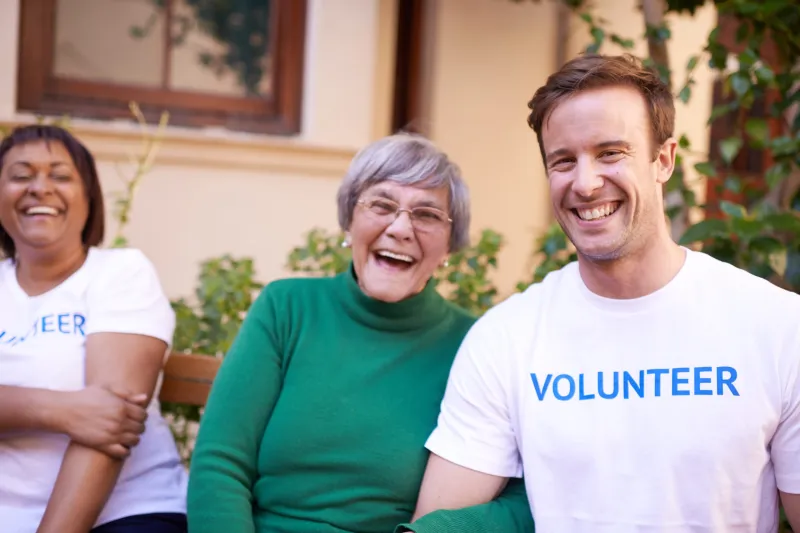
The Second-Act Suitcase: Volunteering Abroad When You Start After 50
Photo: mature volunteer travelling abroad backpack community project, via pbs.twimg.com
There’s a particular advert that follows you around once you pass fifty: the one with the smiling couple on a beach, or the one suggesting you’ve earned a rest. Fair enough. But if the thought that keeps surfacing is less ‘sun lounger’ and more ‘I’d like to spend three weeks doing something useful somewhere else’, you are not alone. Plenty of UK volunteers make their first purposeful trip abroad in their fifties, sixties and beyond. The trick is not to treat it as a late entry in a race. It is to choose a placement that makes sense for the person you are now.
At Una Exchange, we talk to people who have gone before. The pattern is consistent: older first-timers often bring exactly what a host community needs — steadiness, judgement, the ability to turn up on time and not fall apart when plans change. But they can also trip over the same things: overestimating stamina, underestimating heat, or choosing a placement because it sounds impressive rather than because it fits.
Start with an honest mirror, not the brochure
Before you fall in love with a project, have a plain conversation with yourself. Not a doom-laden one. A practical one. What can you do for four hours without needing a lie-down? How are your knees on stairs, your hearing in a noisy room, your sleep after a long flight? If you take medication, can you get enough for the trip, and do you know how to keep it cool or legal? A GP appointment before you book is not dramatic; it is sensible. Ask about vaccinations, malaria tablets if relevant, and whether any existing condition needs a letter for insurance.
Then ask the placement real questions. How many hours a day? Is the work indoors or outdoors? What is the terrain like? How far is the nearest clinic? Is there somewhere to rest? A good organisation will not be offended. A vague one will be. Be honest in return. Saying ‘I can manage a morning of physical work, but I need a proper sit-down at lunch’ is not a weakness. It is the sort of information that helps a host plan.
What your age says before you do
In some communities, an older visitor is treated with automatic respect. In others, people will quietly wonder whether you can keep up. Both reactions are understandable. The mistake is to arrive with a speech about your decades of experience. Experience is useful, but it is not a passport to instant authority. Ask what is needed before you explain what you can offer. Your working life may have given you skills — bookkeeping, teaching, managing people, fixing things, making a budget stretch — but the local version of those skills may look different.
What travels well is temperament. Turning up when you said you would. Not disappearing when the work gets boring. Listening more than directing. Handling an awkward moment without making it a crisis. That steadiness is often more valuable than another pair of hands on a building site.
Choose for the right reasons
A placement is not a retirement tick-box. It is a working relationship with a host community, even if it is short. So ask why this placement, this place, this time. If the answer is mainly ‘because it is somewhere I have always wanted to go’, that is not fatal — but it should not be the whole answer. Look for a clear role, decent supervision, safeguarding, and a plan for what happens when you leave. Avoid anything that treats you as a photo opportunity or a fee with a taxi attached.
Short trips can be genuinely useful when they are scoped properly. But a two-week project that needs a month of training is not built for impact. If your skills are unglamorous — admin, cooking, driving, mentoring — ask whether those are needed. Often they are. The useful volunteer is rarely the one with the most dramatic story.
The family conference
Your adult children may have opinions. Your partner may have concerns. Your friends may say ‘at your age’ in a tone that makes you want to book immediately. Take the concern seriously without handing over the decision. Share the itinerary, the insurance details, the emergency contact, and a check-in plan. Explain why you are going. Then decide.
Family worry is usually love wearing a tabard. You do not need permission to travel, but you do need a plan that reassures the people who care about you. A weekly message and a named contact at the placement go a long way. If someone is trying to talk you out of it, ask what specific risk they are worried about. Sometimes the answer is practical. Sometimes it is just fear. You can respect both without cancelling the trip.
Stamina is a skill you can practise
You would not run a half-marathon without training. Do not treat a volunteering placement as a test of your baseline fitness. In the weeks before you go, walk more, stand more, carry shopping, practise the language, and get used to early starts. Pack lighter than you think. Build rest into the itinerary. The first three days are not the time to prove anything.
Coming home is part of the trip
You may come back tired. You may come back wondering what it all meant. That is normal. A placement does not have to deliver a life-changing epiphany. Sometimes it delivers a better question. Keep in touch with the host if that is welcome. Write down what you learned. And if you want to go again, choose from experience rather than enthusiasm.
The late passport is not late. It is yours. Take it, use it, and choose a placement that values the steady pair of hands you have become.